
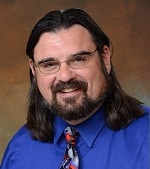
Chad Kollas, MD FAAHPM FACP FCLM
Medical Director of Palliative and Supportive Care at Orlando Health Medical Group Supportive and Palliative Care.
For more than a decade, Chad has dedicated his career to outpatient palliative care, working full-time in a specialized clinic that supports patients living with serious illness. What began as a program embedded in a regional cancer center has evolved into a standalone clinic, allowing for a broader scope of palliative services.
Chad focuses on symptom management, patient-centered care, and helping patients and families navigate complex medical decisions. His work is grounded in improving quality of life by aligning care plans with each patient’s goals, values, and lived experience.
Chad’s path to palliative medicine began with a desire to make a meaningful difference in people’s lives, paired with an interest in the intellectual challenges of healthcare. Although he initially considered orthopedic surgery after a college rugby injury, a pivotal trauma call experience during medical school shifted his focus toward a more cognitive specialty.
That shift eventually led him to palliative care, where clinical insight and compassion intersect. His transition from outpatient internal medicine was driven by a desire for more immediate impact, along with personal insight gained from living with a chronic illness. These experiences strengthened his commitment to improving symptom and pain management.
When an opportunity arose to help build a palliative care program within his health system, Chad embraced it alongside his wife, Beth. A few years into the program, watching the movie “Tuck Everlasting” led to a realization for Chad: the line, “Don’t be afraid of death. Be afraid of the unlived life,” highlighted that the goal is not simply to help patients dying from serious illness, but rather to help patients with serious illness live their best lives.
Compassion, Precision, and Advocacy in Palliative Medicine
Chad’s work in palliative care is defined by a balance of compassion, empathy, and clinical precision. Delivering individualized care requires strong communication skills, attention to detail, and a commitment to shared decision-making.
A recent milestone highlights both his clinical and advocacy work: co-authoring a chapter on pain policy for Bonica’s Pain Management, 6th Edition, set for publication in Fall 2026. The chapter emphasizes the importance of balanced opioid policies and addresses misconceptions that have restricted access to compassionate pain care.
This accomplishment reflects years of clinical experience and advocacy, bringing together hands-on patient care with efforts to improve broader pain management practices.
Finding Community and Leadership Through AAHPM
Joining the American Academy of Hospice and Palliative Medicine (AAHPM) was a defining moment in Chad’s career. After attending his first Annual Assembly in 2003, he found a strong sense of community among clinicians who shared his commitment to palliative care.
Networking and collaboration have been the most valuable aspects of his membership, leading to long-term professional growth and partnerships. Active engagement within AAHPM has further strengthened this experience.
The Academy has supported Chad’s development through educational resources and leadership opportunities. Early in his career, Annual Assembly and UniPACs (what is now the Essentials of Hospice and Palliative Medicine Nine Book Series) helped build his clinical knowledge, while later involvement in leadership roles expanded his professional impact.
Chad has served in multiple roles, including AAHPM’s Delegate to the American Medical Association House of Delegates since 2008. His extensive contributions have spanned committees focused on public policy, advocacy, governance, and editorial work. More recently, he has helped advance a Pain Care Discussion Group, creating a collaborative space for clinicians focused on improving pain management.
Commitment to Lifelong Learning and the Future of Palliative Care
A key lesson from Chad’s medical training continues to shape his approach: much of what clinicians learn may evolve, making humility and adaptability essential. Continually asking “What if I’m wrong?” reinforces his commitment to lifelong learning.
Currently, Chad is focused on expanding his expertise in buprenorphine prescribing for pain management, an increasingly important area within palliative care. His work includes independent study, collaboration with colleagues, and contributing to professional education, including moderating a session at the 2026 Annual Assembly.
He also remains cautious about emerging trends such as artificial intelligence in clinical documentation, noting that human judgment and communication remain essential in patient care.
Finding Balance Through Family, Nature, and Personal Interests
Outside of work, Chad prioritizes time with his family, often hiking places like Sedona and U.S. National Parks. He also enjoys beach walks and sunsets along Florida’s Gulf Coast. These experiences offer both connection and a way to recharge. Chad also watches college softball, roots for the Minnesota Vikings, and plays Fallout 76 in his free time.
A fun detail about Chad is his early interest in technology. He was the first student in his medical school class to own a desktop computer, using it to create figures for his first published research and edit shared class materials.